
Search North Carolina Civil Court Records
North Carolina civil court records are public documents kept by the Clerk of Superior Court in each of the state's 100 counties. These records cover lawsuits, judgments, liens, and other civil matters filed in District and Superior Courts across North Carolina. You can search civil court records online through the NC eCourts portal or visit any local courthouse. The statewide system allows lookups by name, case number, or attorney details. This guide explains how to find, access, and obtain copies of civil court records across North Carolina.
North Carolina Civil Court Records Quick Facts
Where to Find North Carolina Civil Court Records
Every county in North Carolina has a Clerk of Superior Court responsible for maintaining civil court records, including complaints, motions, orders, and final judgments. Both District Court and Superior Court civil filings pass through this office, which serves as the official custodian under state law. Anyone can walk in during regular business hours and inspect any civil court record at no charge under N.C. Gen. Stat. § 132-6, which guarantees open access to government documents. Public self-service terminals in every courthouse lobby allow visitors to search North Carolina civil court records without staff assistance, and these terminals connect directly to the statewide case management system so that search results reflect the most recent filings and dispositions available.
A unified court system operated by the North Carolina Judicial Branch serves all 100 counties through District and Superior Courts. Each county's Clerk of Superior Court maintains civil case files as required by N.C. Gen. Stat. § 7A-109, and staff at any clerk's office can help you locate records, pull case files, and make copies for a small fee. North Carolina civil court records date back decades in most counties, with many offices holding archived files that predate electronic record-keeping.
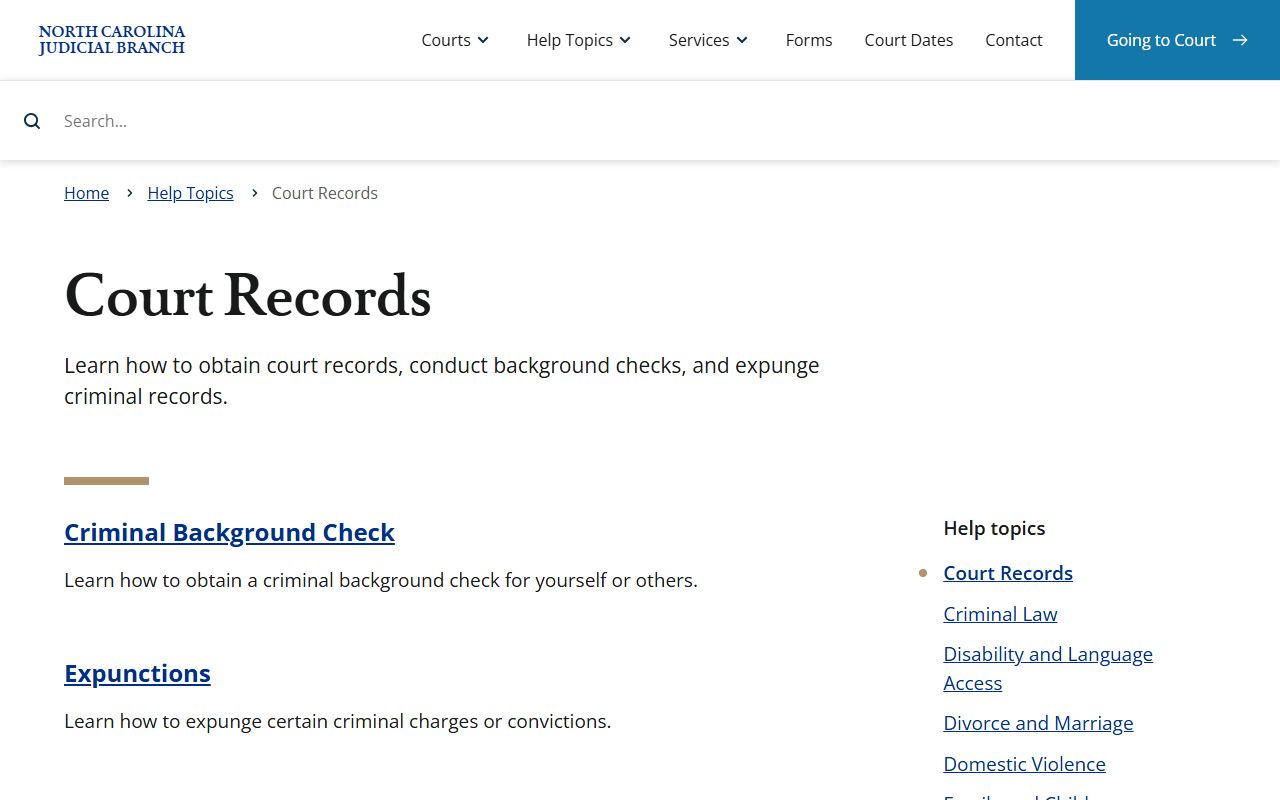
You can look up the address, phone number, and hours for any Clerk of Superior Court through the NC Judicial Branch website at nccourts.gov, which lists every courthouse in the state. For detailed guidance, the court records help page walks you through how to request civil court records in North Carolina step by step.
Records retention in North Carolina follows schedules set by state law, and civil cases generally stay on file for 10 years after closure while felony records are kept permanently. Under these retention policies, the clerk's office is the proper custodian for civil court records, and older files may be transferred to the NC State Archives once the retention period expires. Knowing these timelines helps you determine whether to contact the local clerk's office or a state-level archive when searching for older civil court records in North Carolina.
Note: Contact the Clerk of Superior Court in the county where the case was filed because the NCAOC does not hold civil court case files.
How to Search Cases Online
Free public access to civil court records across all 100 North Carolina counties is available through the NC eCourts portal, which replaced the older Odyssey system as part of a statewide modernization effort. Smart Search lets you find cases by party name, case number, citation number, attorney name, or business name without any registration requirement. Built on the Tyler Technologies Odyssey platform, the eCourts portal works on phones, tablets, and computers, providing the same search capabilities regardless of which device you use to access North Carolina civil court records.
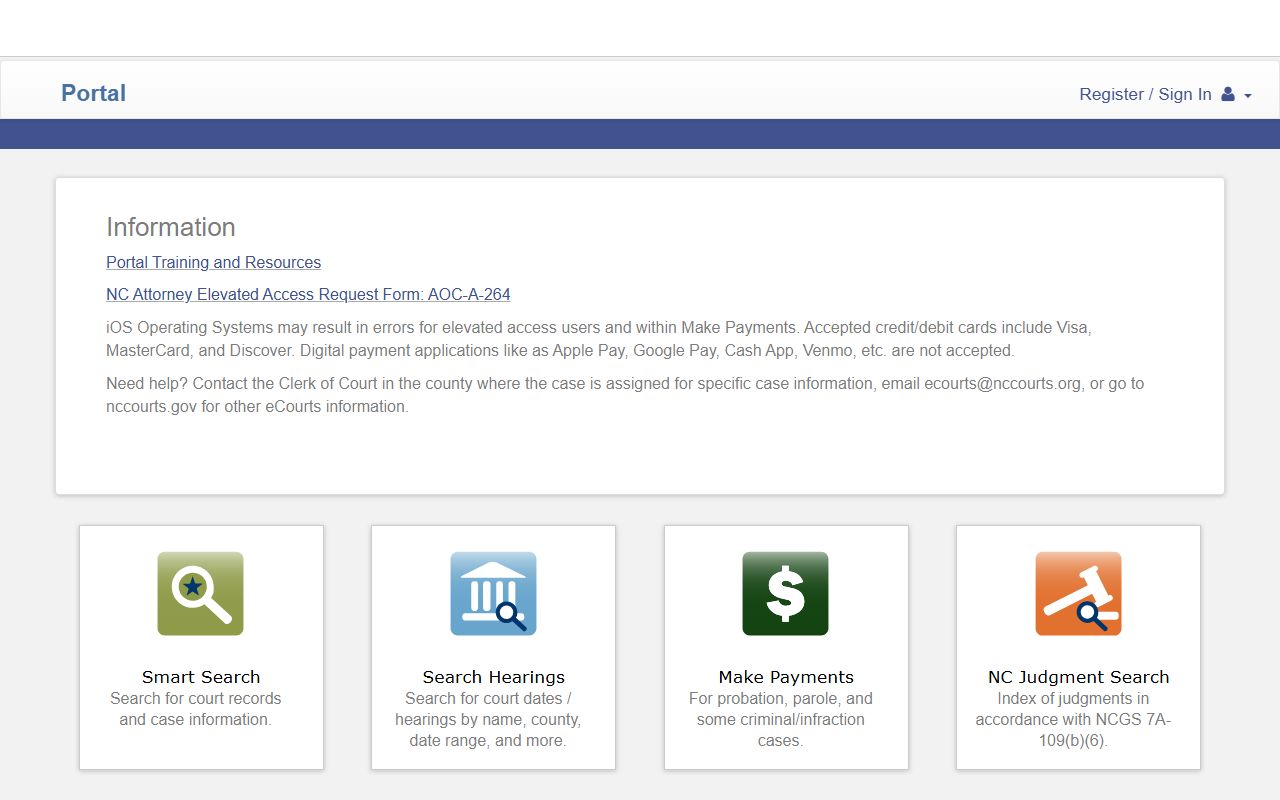
You can search for North Carolina civil court records using these methods:
- Enter a party name in Last, First format
- Use a case number if you have one
- Search by attorney bar number or name
- Try wildcard searches with an asterisk for name variations
- Filter results by county and case type
Each search returns up to 200 results, and the Register of Actions provides a summary of public docket entries including filing dates, party names, and current case status. Documents attached to non-restricted cases can be viewed and downloaded directly from the portal, which is especially useful for attorneys and researchers who need quick access to filings without visiting a courthouse in person. Social Security numbers and other sensitive identifiers are automatically redacted from all search results to protect personal privacy in accordance with North Carolina court policy.
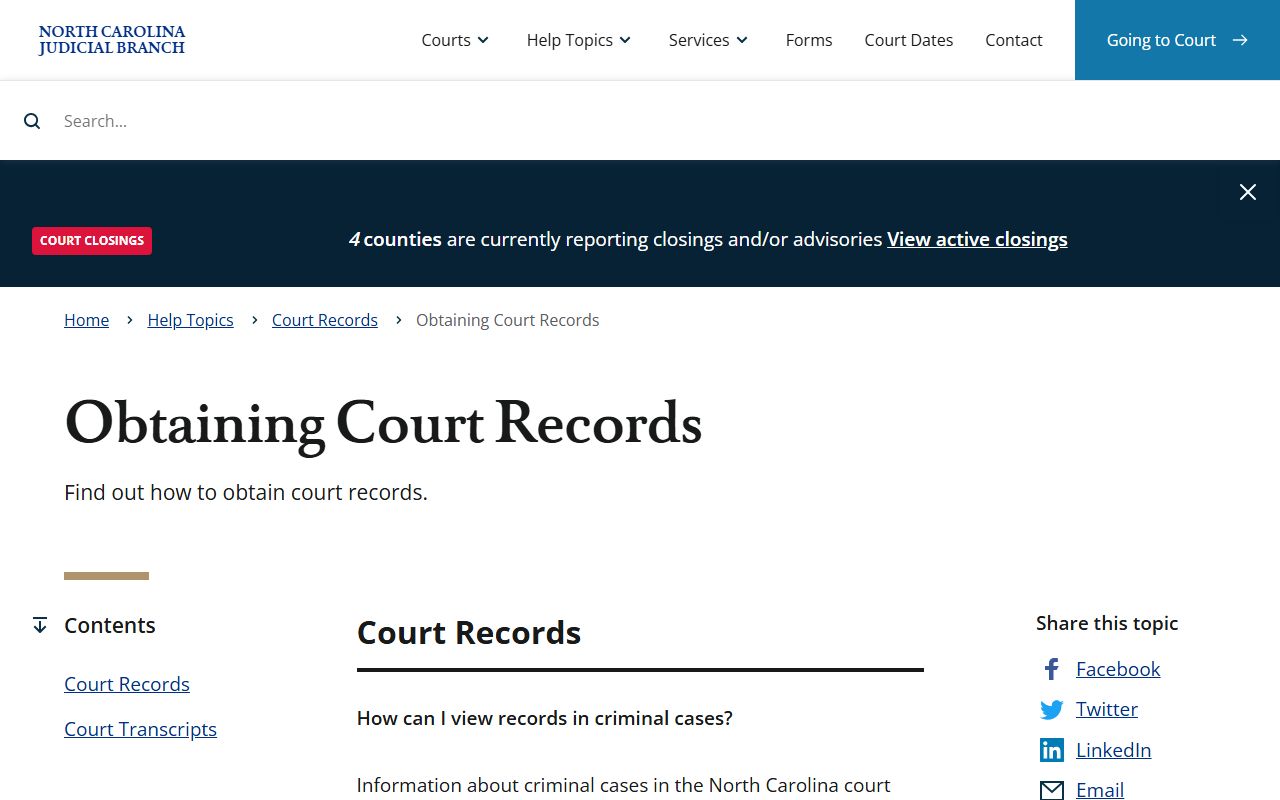
For a step-by-step guide, visit the obtaining court records page on the NC Judicial Branch site, which covers search tips, request steps, and current fees for North Carolina civil court records. That page also explains how to use the VCAP (Virtual Case Access Program) terminals available inside courthouses for more detailed searches that may include documents not yet uploaded to the online portal.
Keep in mind that the Register of Actions is a summary of the civil case, not the official court record itself.
Types of Civil Court Records in North Carolina
Civil court records in North Carolina come from several court levels, each with its own jurisdiction and filing procedures. District Court handles civil cases with claims under $25,000, while Superior Court takes cases above that threshold and small claims cases under $10,000 go through magistrate court. Because each court level generates its own distinct set of records, understanding which court heard a case is essential when you need to locate specific documents or request copies from the appropriate clerk's office in North Carolina.
Every civil case file contains a collection of documents that together tell the full story of the dispute. A complaint initiates the case, an answer responds to the allegations, and motions ask the court for specific rulings on procedural or substantive issues throughout the litigation. Final judgments decide the outcome, and docket sheets track every event from the initial filing through to case closure, creating a comprehensive timeline that researchers and attorneys rely on when reviewing civil court records stored by the clerk in North Carolina.
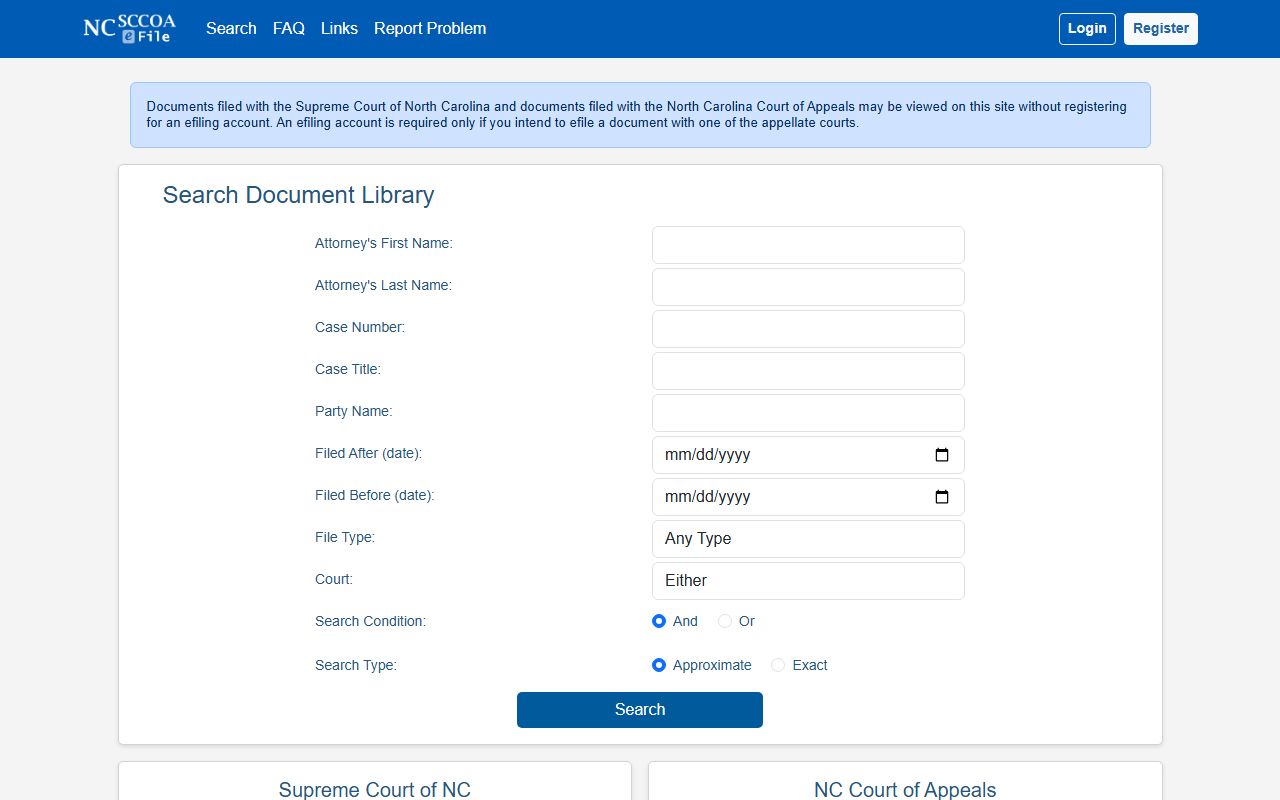
Civil appeals from District and Superior Courts are handled by the NC Court of Appeals and Supreme Court, and selected filings from 2000 to the present are available online at the appellate courts website. Searches can be conducted by case number, party name, or case title, with Court of Appeals decisions published on the first and third Tuesdays of each month.
As a specialized forum within the court system, the North Carolina Business Court handles complex civil disputes involving corporations, securities, antitrust claims, and LLCs. Electronic filing is mandatory for all Business Court civil cases in North Carolina, and the Orders of Significance database holds key decisions from this court that often set important precedents for commercial litigation statewide.
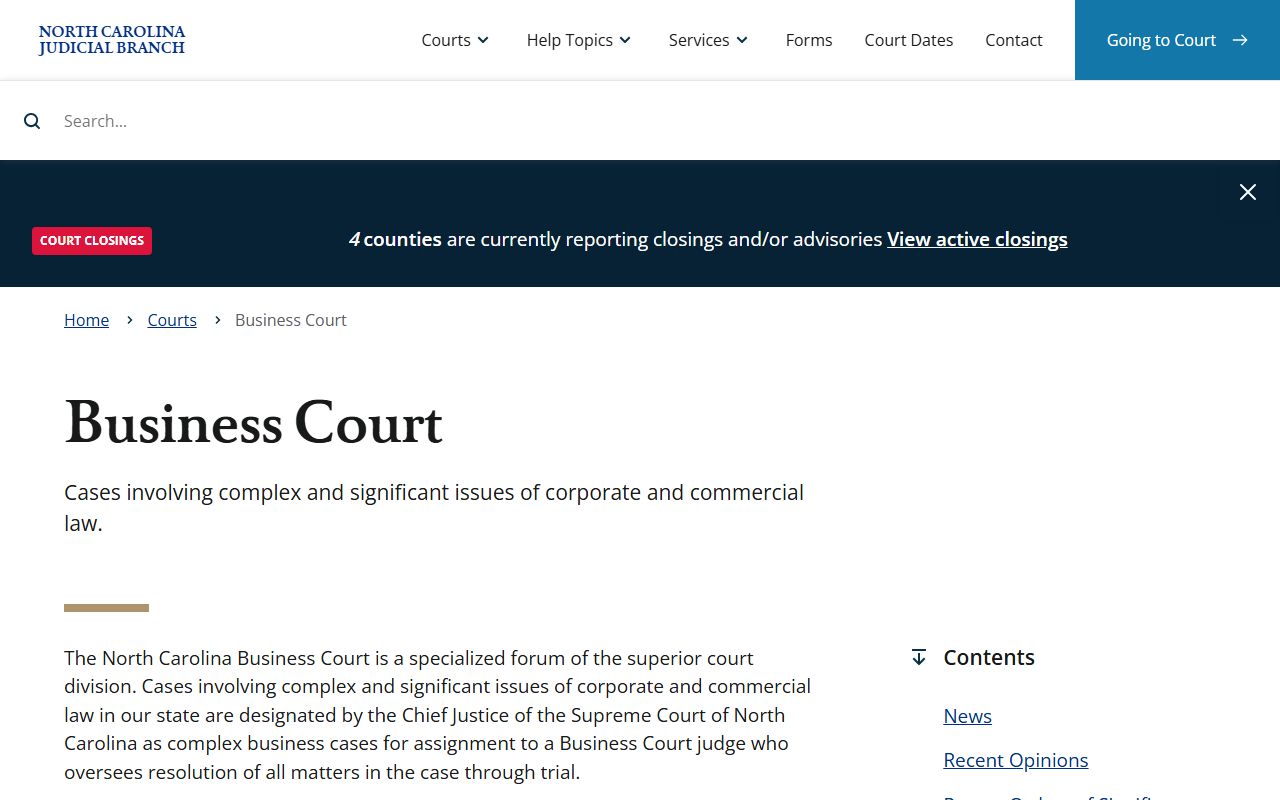
Business Court opinions and orders of significance can be accessed online through the NC Judicial Branch website, allowing attorneys and the public to review landmark commercial dispute rulings without visiting a courthouse.
North Carolina Public Records Access
Under N.C. Gen. Stat. Chapter 132, civil court records are public in North Carolina, and every person has the right to inspect government records regardless of their reason for requesting access. This law broadly covers documents, papers, maps, photographs, electronic data, and all other material created in connection with the transaction of public business. Record custodians must allow access during regular business hours, and they cannot require requesters to explain why they want to see civil court records or limit access based on the intended use of the information.
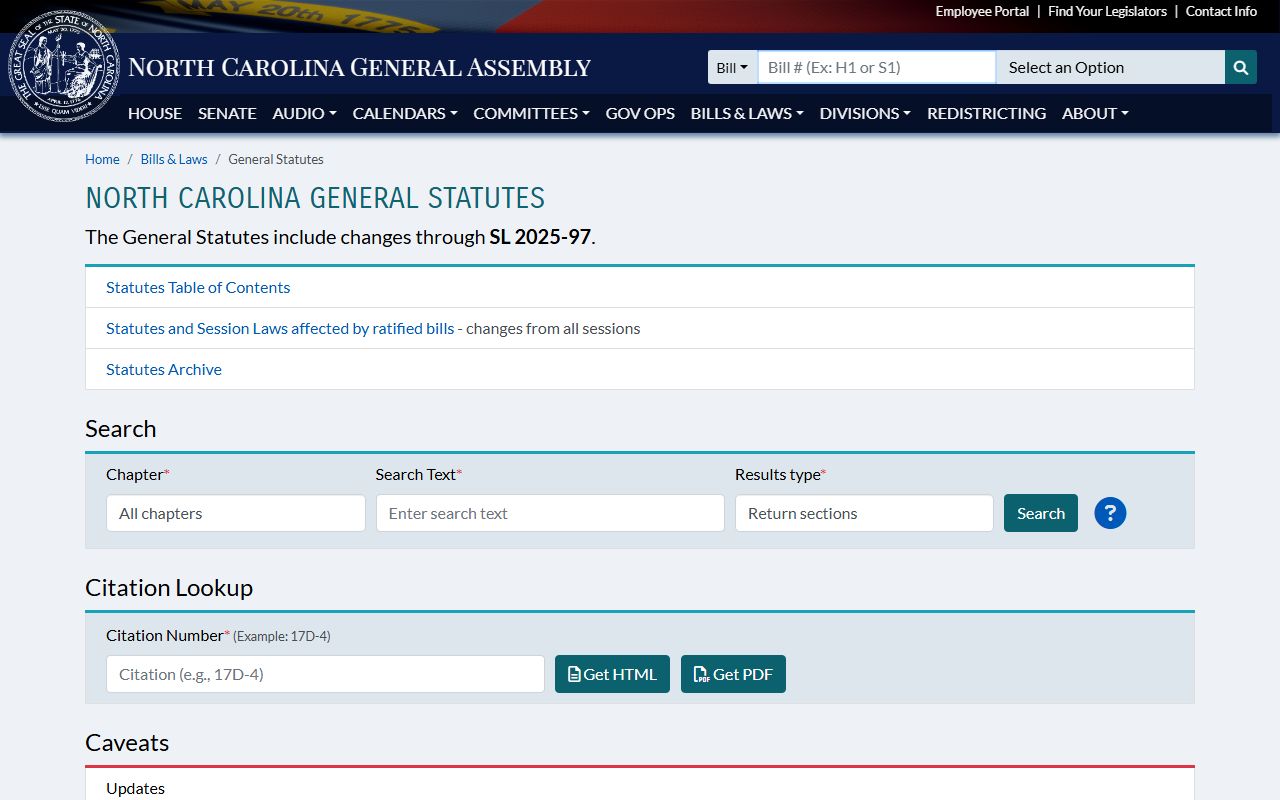
Certain categories of civil court records are restricted by specific statutes that override the general presumption of openness. Juvenile cases under N.C.G.S. § 7B-2901 stay confidential, mental health proceedings under N.C.G.S. § 122C-207 are sealed, and adoption records are not available to the public. A judge can also seal other civil court records for good cause when privacy concerns outweigh the public interest in disclosure, and N.C.G.S. § 1-72.1 establishes the formal steps for asserting a right to access civil judicial records or proceedings in North Carolina.
When access to civil court records is denied, N.C.G.S. § 132-9 provides a legal remedy by allowing you to apply to the General Court of Justice for an order that compels disclosure. Agencies may charge reasonable fees for copies, typically $0.25 per page.
North Carolina Civil Court Records Fees
Copy fees for civil court records follow a statewide schedule set by law under N.C.G.S. § 7A-308, with standard copies costing $0.25 per page and certified copies running $2.00 per certification plus the per-page fee. In-person inspection of civil court records is free at every courthouse in North Carolina, so you can walk into any clerk's office during business hours, ask to see a file, and have staff pull it for you without an appointment or any charge for simply viewing the documents.
Written requests for administrative records can be submitted through the NCAOC public records request page, but for civil case files you should contact the Clerk of Superior Court directly in the county where the case was filed. Questions about North Carolina civil court records access procedures can also be directed to publicrecordsrequest@nccourts.org, where staff can clarify which office holds the records you need and explain any applicable fees before you submit a formal request.
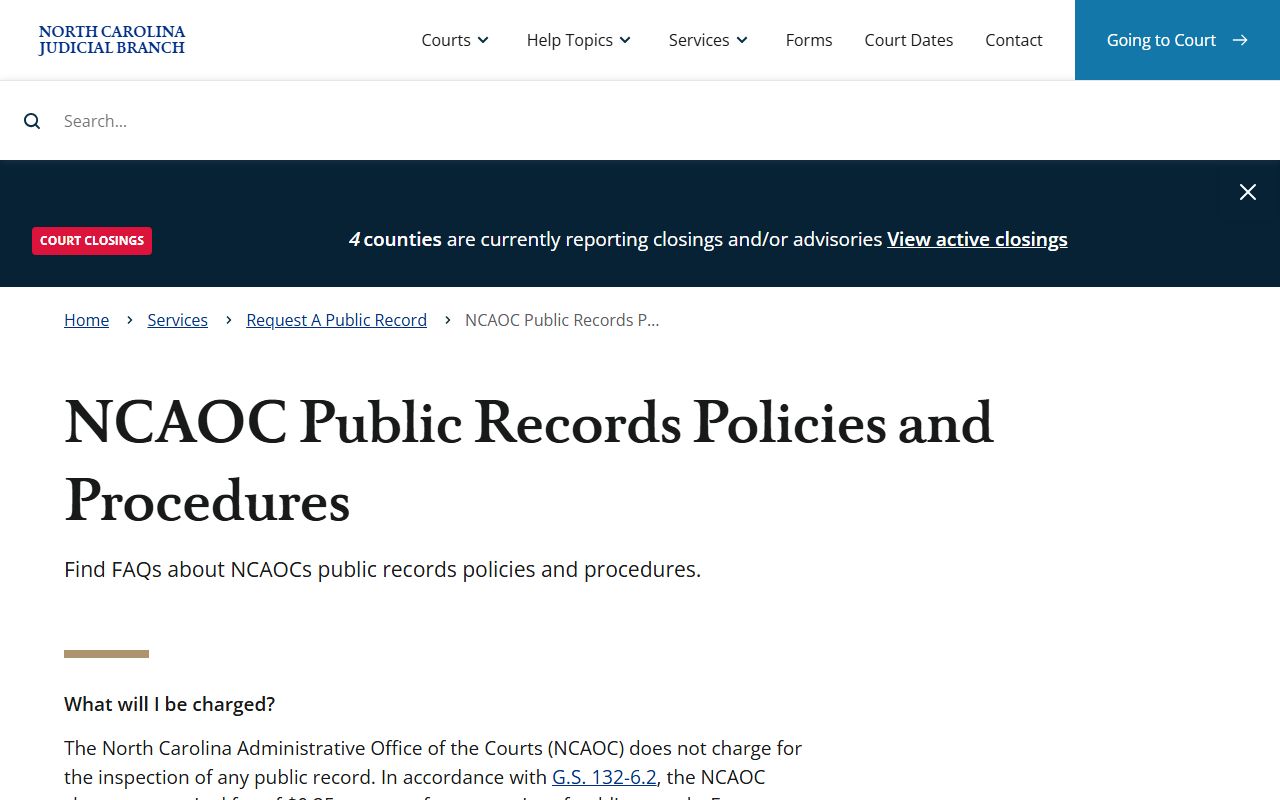
Extraordinary requests may cost more under N.C.G.S. § 132-6.2, which allows agencies to charge higher fees when a request requires extensive staff time or heavy use of technology resources. For organizations that need ongoing access, the Remote Public Access Program provides online access to civil and criminal data from all 100 counties for licensed users, serving businesses and legal professionals who require regular bulk access to North Carolina civil court records.
How to Get Court Record Copies
Several methods are available for obtaining copies of civil court records in North Carolina, with the most direct option being an in-person visit to the Clerk of Superior Court in the county where the case was filed. Give the staff a case name or number and they will pull the file and copy what you need at $0.25 per page, accepting cash, check, or money order for payment. Mail requests are another option if you cannot visit in person, and you should write to the clerk with the case number, names of the parties, and a description of which documents you need along with your payment, keeping in mind that response times depend on the volume of requests at that North Carolina office.
Online access is available through the eCourts portal, which lets you view and download some documents from civil court records, although not every document is available through the portal and complete civil case files may require contacting the clerk's office directly. Inside each courthouse, the Civil Case Processing System (VCAP) offers additional tools at public access terminals, including party name searches and judgment data searches that may surface records not yet available on the web-based portal.
Historical civil court records require different research strategies.
Research guides for finding historical civil court records are available through the UNC Law Library, which holds print records going back to 1874 alongside the NC State Archives. Older North Carolina civil court records may require an in-person visit to these locations, particularly for cases predating the electronic filing systems that most clerk's offices adopted in the early 2000s, and researchers should contact the archives in advance to confirm availability and any special access procedures that may apply to fragile or restricted materials.
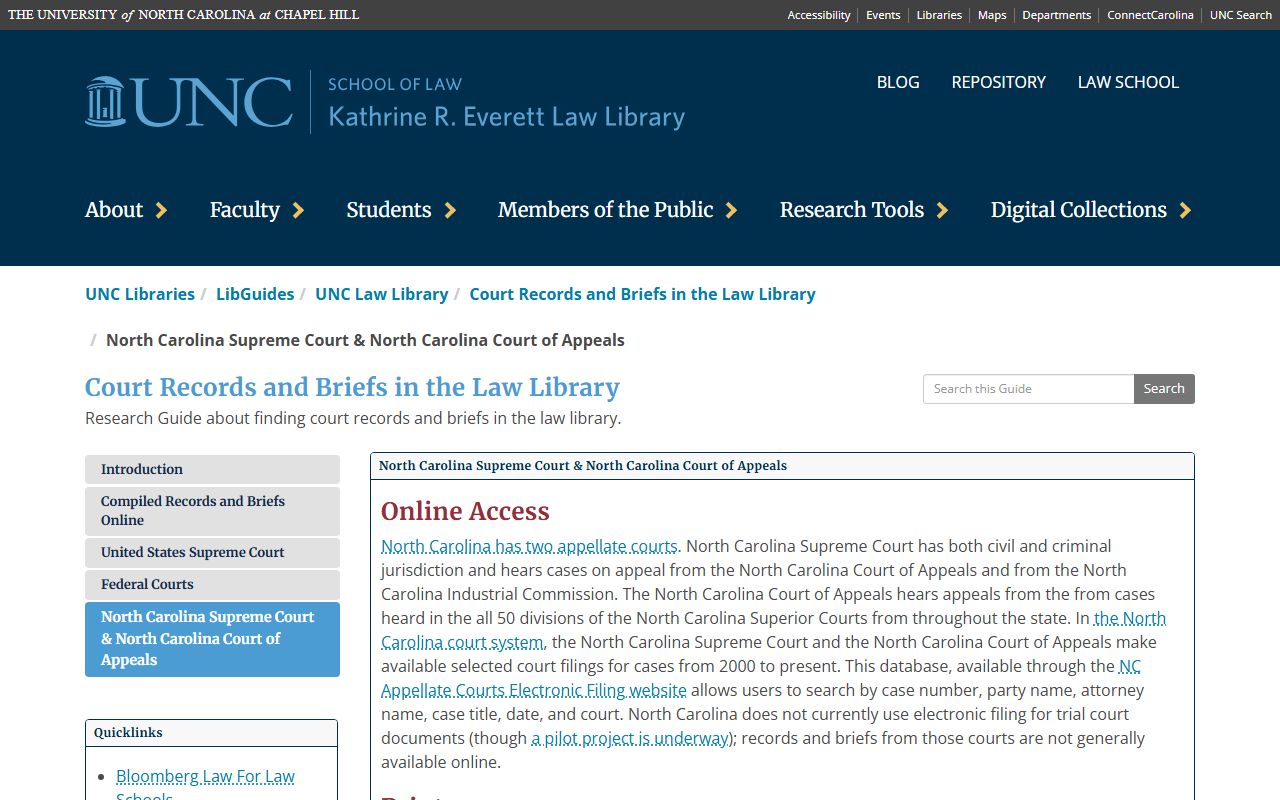
Note: For historical civil court records before 2000, in-person visits to archives or law libraries may be necessary.
Browse North Carolina Civil Court Records by County
Each county in North Carolina has its own Clerk of Superior Court that keeps civil court records. Pick a county below to find local contact details and resources for civil cases in that area.
Major North Carolina Cities
Residents of major cities file civil cases at their county courthouse. Pick a city below to find civil court records information for that area.